
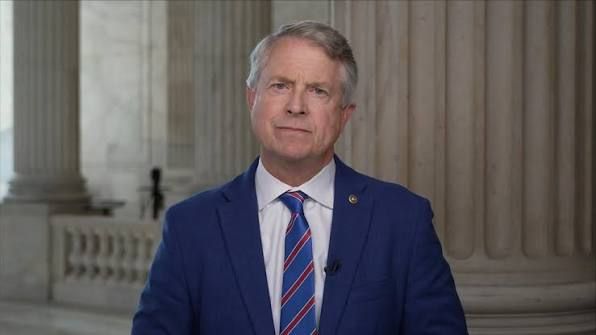
For a rural Kansas patient, the nearest specialist can be an hour away or more. A short consultation can become a full day of driving, missed work, and caregiver logistics before the doctor asks the first question. Sen. Roger Marshall, a physician who practiced in rural America, is taking aim at the Medicare rules that turn distance into a billing obstacle.
Marshall joined a bipartisan group to introduce the CONNECT for Health Act. The bill would permanently remove geographic restrictions for Medicare telehealth, allow a patient’s home to count as an originating site, let rural health clinics and federally qualified health centers provide telehealth as distant sites, expand eligible professionals, and remove some in-person requirements for telemental health.
Marshall called telehealth important “especially for those who live in rural America”. Kansas patients know the stakes. An older resident could stay home for a follow-up, a caregiver could avoid missing a shift, and a rural clinic could connect a patient to a specialist in another city without sending that patient onto the highway.
The obstacle is Washington’s temporary-rule treadmill. At the time of introduction, current flexibilities were scheduled to expire on Sept. 30, 2025, unless Congress extended them. The CMS guidance explained that many Medicare patients generally would need to be in a rural medical facility for most telehealth services after that date, with exceptions including behavioral health.
Marshall’s bill would make the patient’s home count. That is a direct challenge to a system built around buildings instead of people. The federal rule sees a location; the Kansas physician sees an elderly patient who should not have to cross a county line for a routine appointment.
The bipartisan lineup included Democratic Sen. Brian Schatz, Roger Wicker, Mark Warner, Cindy Hyde-Smith, Peter Welch, John Barrasso, Amy Klobuchar, Jerry Moran, and dozens of other senators. The American Medical Association, AARP, American Hospital Association, National Association of Rural Health Clinics, and American Telemedicine Association also backed the effort.
The legislative text spells out covered sites, eligible professionals, emergency waivers, data reporting, and telemental-health provisions. The proposal is introduced legislation awaiting congressional action. Its reach depends on regulations, broadband, provider participation, and clinical judgment, but those practical questions do not justify preserving an arbitrary mileage rule.
Marshall is not asking Medicare to turn every medical visit into a video call. He is demanding that rural patients get access to a tool urban patients already use. If a doctor can safely reach a Kansan through a screen, Washington should not force that patient to spend the day on the road to satisfy a billing map.
The miles are real. For rural patients, that difference is the whole fight. Marshall’s answer is to make the shortest route to care the route patients can actually take.