
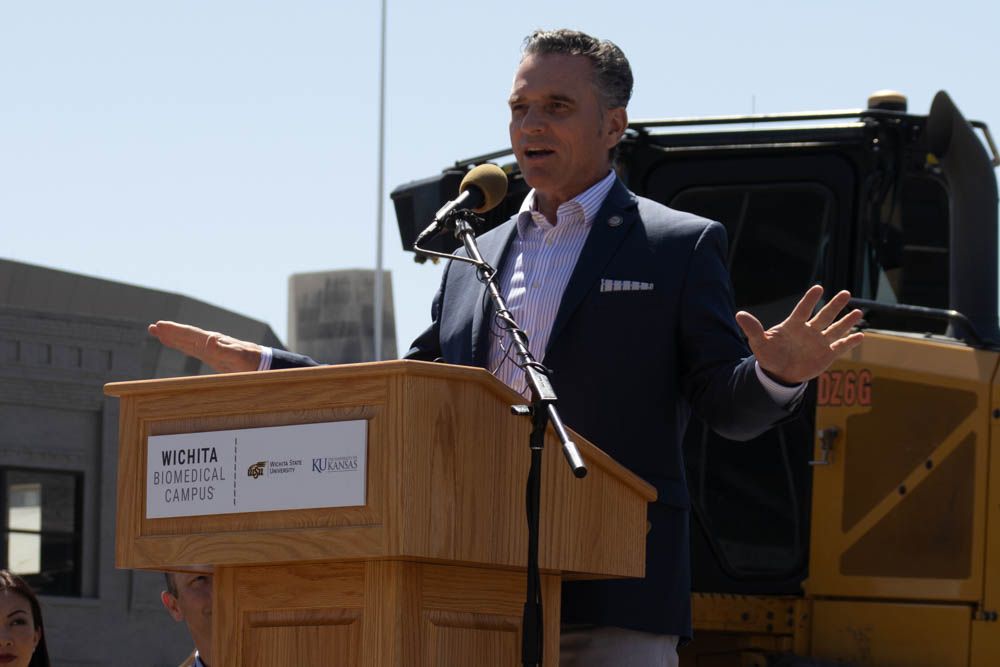
The latest Kansas data-center fight has moved from server rooms to the State Fair, town-hall meetings and a governor’s race. One side wants a moratorium; Ty Masterson says Kansas already has guardrails.
The political fight centers on water, energy and land-use concerns, with opponents calling for a halt to new projects. Masterson’s answer is blunt: “America wins the AI race or we hand it to China. But folks build here on our terms.” His position is that Kansas must compete or watch other states collect the investment, construction and jobs.
Senate Bill 98 gives developers a substantial benefit, with conditions written into the law. Under the enacted law, a qualified data-center business must invest at least $250 million in a Kansas facility within five years after operations begin and create at least 20 new jobs within two calendar years.
The law includes a sales-tax exemption on certain development, construction, equipment and labor purchases that can last 20 years. The Department of Commerce calls it a “20-year state and local tax exemption designed to attract large-scale, permanent data center developments.” Kansas is seeking permanent facilities, not a temporary warehouse.
The law also imposes limits. A qualifying business must purchase electricity from a public utility for 10 years and use water-conservation, reuse or replacement practices. An oversight board connected to the Kansas intelligence fusion center must approve public aid, and utilities may not offer a discounted economic-development electric rate.
The Legislative Research Department’s summary supplies the thresholds opponents and developers will have to live with. The KCUR report shows why communities are asking about electricity, water and land before a facility arrives. Those questions belong at the table; they do not require Kansas to surrender the table to a moratorium campaign.
The choice is especially sharp for communities that must weigh a new facility against the power and water it will require. A company deciding where to build will look for certainty, and Kansas has now put its offer and its conditions in the same statute. A pause would send a different signal: come back after someone else wins the race.
Masterson’s Senate profile identifies him as the Republican president during the period Kansas set this policy. Opponents want a pause; Masterson argues local officials should use the guardrails already written into law. His position gives Kansas a place in the AI race.
SB 98 is enacted law. It sets public eligibility rules: a company qualifies only after the investment, job and operating conditions are met, with those conditions public before a project qualifies.
Kansas has workers and a chance to compete. The state can let opponents turn every new industry into a veto, or it can demand that developers bring $250 million, create jobs and respect Kansas resources. Masterson’s verdict is the right one: build here responsibly and do not hand the future to China.