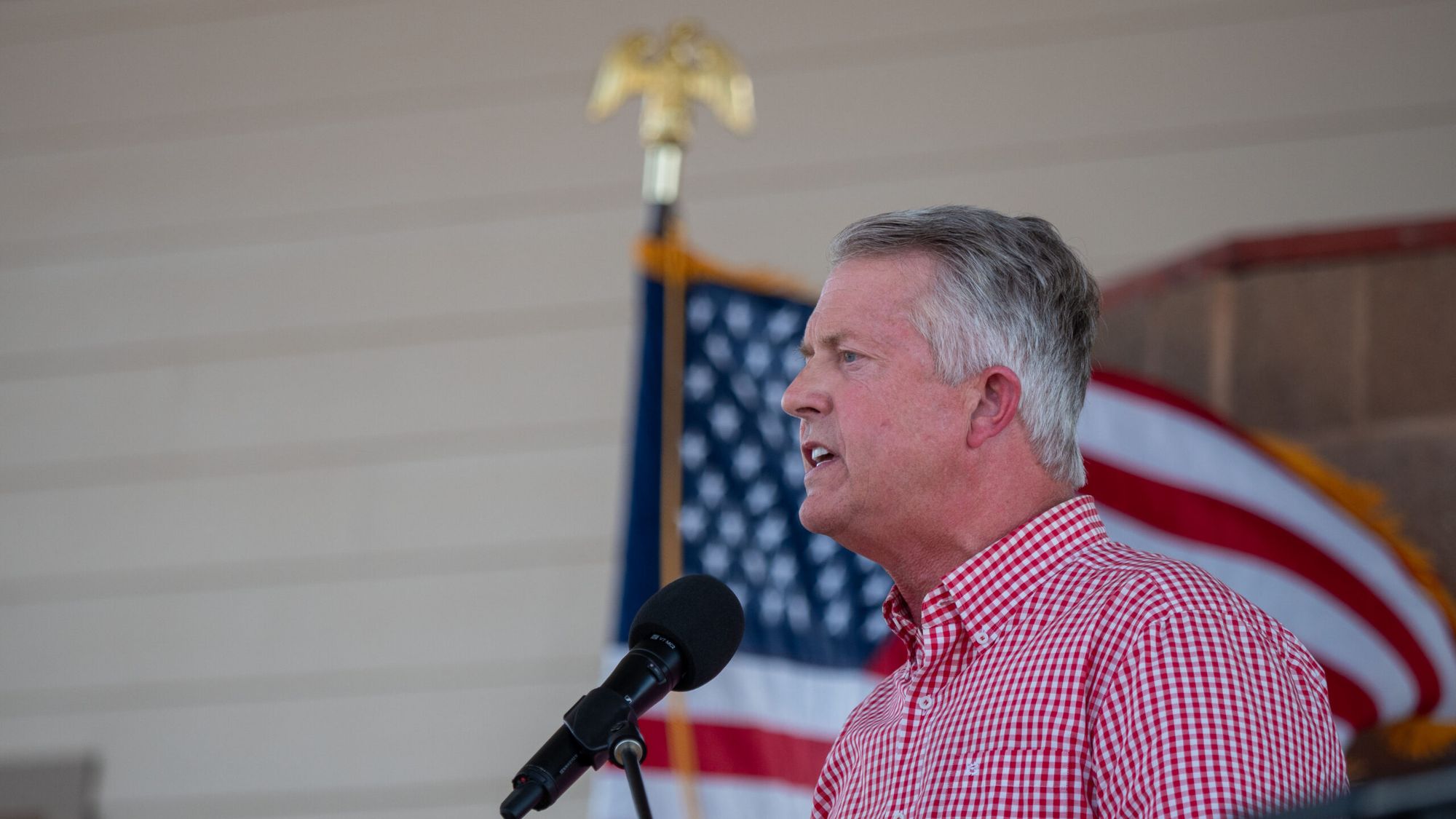
At a Kansas loan desk, the farm has not changed—but the interest bill has. Higher rates hit the land note, the equipment loan, the operating line, and the small-town mortgage before a producer can harvest a single bushel. Sen. Roger Marshall is going after that pressure with a tax proposal built to give local lenders a reason to compete harder for rural borrowers.
Marshall joined Sen. Jerry Moran to introduce the Access to Credit for our Rural Economy Act, or ACRE Act. It would let qualified lenders exclude interest received on certain loans secured by agricultural real estate or rural residential property from gross income.
“High rates raise the cost of doing business for family farms,” Marshall said. That cost decides whether a producer buys land, replaces a combine, plants another field, or keeps the next generation on the operation. It determines whether a small business expands or a young family can afford to stay in town.
The ACRE Act text targets agricultural real estate and certain single-family homes in rural communities, including communities with fewer than 2,500 residents. It sets a $750,000 principal limit for qualifying single-family-home mortgages and defines the banks, insurers, and other lenders eligible for the tax treatment.
That is a direct challenge to Washington’s habit of answering rural hardship with programs and applications handled by distant offices. A community bank already knows the producer’s acreage, equipment, weather exposure, and market. Marshall’s plan puts the tax code behind that local judgment instead of forcing farm country to work around it.
Kansas agriculture cannot run on slogans. The Kansas Department of Agriculture lists cattle, corn, wheat, soybeans, dairy, sorghum, and hogs among the state’s leading products and describes agriculture as a major economic driver. Credit keeps those operations moving through planting, harvest, expansion and repayment.
The Senate announcement estimates the measure could reach more than 4,000 rural communities and save family farmers and producers more than $400 million in annual interest expenses. Those are projections tied to the proposed tax treatment, but the problem they address is already in front of borrowers every month.
Marshall has bipartisan backing: Moran, independent Sen. Angus King, Democrat Ruben Gallego, and Republicans Kevin Cramer and Tommy Tuberville. The American Bankers Association’s support brings in lenders who understand how a lower-cost loan can ripple through a small town.
The Act has been introduced and awaits congressional action. Whether the benefit reaches a borrower will depend on lenders, competition, the final law, and financial conditions. Marshall’s position is direct: rural families should not be priced out of their own future while Washington’s tax code makes credit harder to afford.
Marshall’s ACRE Act gives the people closest to the problem a tool to fight back. For Kansas farm country, that Republican plan beats another Washington lecture about tightening the belt.