A hog raised in Kansas can spend its entire life here and still face a production demand written for California. That is the fight Sen. Roger Marshall is taking to Washington: whether a single state can pressure producers across the country to rebuild barns, change operations, and absorb new costs just to reach its market.
Marshall and Iowa Sens. Chuck Grassley and Joni Ernst introduced the Food Security and Farm Protection Act. The measure would stop a state or local government from imposing an additional preharvest production standard on an agricultural product raised in another state and sold in interstate commerce.
California’s Proposition 12 is the pressure point. It sets minimum space requirements for egg-laying hens, breeding pigs, and veal calves, then restricts the sale of products that do not meet those requirements. California can choose its market rules. Marshall’s answer is that California cannot use them to dictate how Kansas producers operate beyond California’s borders.
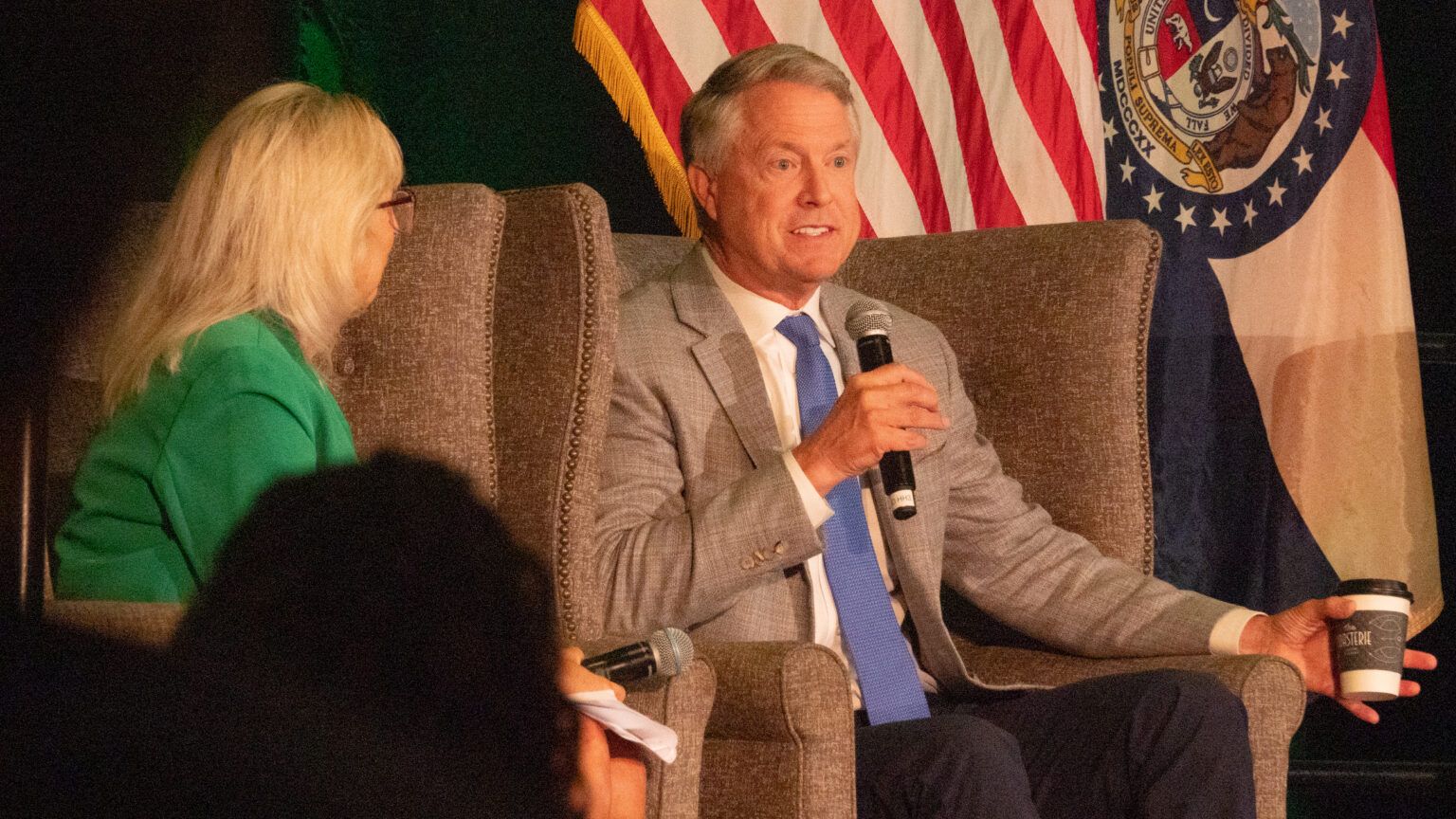
“Midwest farmers and ranchers should not be hamstrung by coastal activist agendas,” Marshall said. He is talking about the people who carry livestock costs, weather risk, labor shortages, and equipment debt before a product ever reaches a consumer.
Kansas agriculture is large enough to feel every outside mandate. The Kansas Department of Agriculture lists cattle, wheat, corn, soybeans, sorghum, dairy, and hogs among the state’s leading products. The USDA’s 2024 overview counts 55,500 farm operations across 44.8 million acres.
The figures cover feed dealers, truck drivers, processors, local lenders, equipment shops, and families trying to hand an operation to the next generation. If a distant rule changes the economics of livestock, the hit spreads through the towns that depend on livestock.
The producer still carries the risk when the rule arrives. A barn built for Kansas conditions does not become less costly because an out-of-state market has adopted a new standard. Marshall is putting that basic reality ahead of the demand that every producer everywhere conform to California’s preferred model.
Marshall is punching at the source of the problem: one state’s preferred production standard becoming everyone else’s operating manual. The bill text would create a federal standard for when a state may impose conditions on out-of-state agricultural production and give an affected person, business, association, or government a way to challenge a covered regulation in federal court.
The Act has been introduced and awaits congressional action. It would not settle every dispute over animal care or guarantee cheaper groceries, but it would give producers a legal defense against rules that reach past the state that adopted them.
Kansas has spent generations feeding America. Marshall is telling Washington that the people doing that work will not be ordered around by a coastal rulebook. California can set its own standards; it cannot run Kansas farms.